Why it’s Dangerous to Use Summer Tires in Cold Weather

The seasons are changing, and winter is on the horizon. It's getting colder, and perhaps there's a bit of snow or ice on the road. You know you should, but changing the tires on your car can be a hassle. You're wondering whether you can leave the summer tires on your vehicle. The answer is no. Using summer tires in winter conditions can be dangerous and risks damaging your tires.
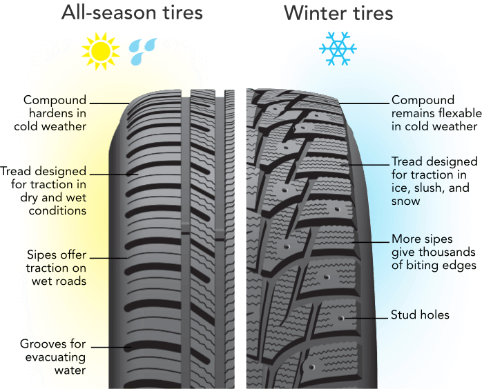
Summer tires have lower rolling resistance than winter tires; this improves efficiency and handling while also reducing noise levels. The tread on these performance tires however, performs poorly on ice and snow. In winter weather, summer tires have poor acceleration. Winter tires or snow tires will outperform them on snowy roads. Furthermore, summer tires have low rolling resistance, resulting in long brake distances on ice or snow. A winter tire has deep tread, with sipes that dig into snow and grip onto ice, providing shorter braking times. By contrast, the compound of winter tires is much softer and less vulnerable to cold temperatures.
The rubber compound on summer tires is designed for warm weather. As the temperature drops, the rubber stiffens. Even if there is no snow or ice, the tire loses traction. Even on dry roads without ice and snow, winter brings colder temperatures. Summer tires are not built for cold weather. The tire tread will stiffen. In addition to reducing traction, this poses a risk to the tire itself. The tire loses its elasticity and may crack. There's a risk of chipping of the overly stiff thread block. Chipped and cracked tires are not safe to drive on and must be replaced.