Tires are one of the most (if not THE most) integral part pf any vehicle. After all, it's a vehicles tires that directly transfers the energy from your engine to the pavement so that your vehicle can move.
Traction.
Tires are able to stick to the pavement/road because of traction. Roughly defined, traction is the action of drawing or pulling a vehicle over a surface, like a road or track.
One of the most frequently asked question we get is: "What tires should I be using...". This is because most of our drivers are worried about the kind of traction they need so they don't go slipping off the pavement and/or to avoid horrible blowouts.
Stopping Distance.
At some point, we all feel the need for speed, but we also require the need to stop!
The speed to begin breaking always varies depending on so many variables. Are you driving a car or a truck? How fast are you going? The weather and tire tread play a crucial part also! There's many accident reports where a person states "I was breaking, but nothing happend!" Stopping with partially worn tires or the wrong kind of tire can lead to these kinds of disasters.
Wet Handling & Air Pressure.
These two terms work hand in hand. We've all heard of (or unfortunately experienced) the term hydroplane. Hydroplane = DANGEROUS! Having the proper tire tread to handle wet surfaces can still fail you if your tire isn't properly inflated.
Under inflation will tend to wear the tires shoulder areas faster than the center. This is due to the insufficient air pressure not allowing the center of the tread to carry its share of the weight. Correctly inflated tires will allow the tire's air pressure to provide even distribution of the vehicles weight across the entire tread footprint. Tire manufacturers are now developing products with greater resistance to hydroplaning and greater wet traction. However, poor tire inflation maintenance can make any tire; no matter how amazing, an awful tire.
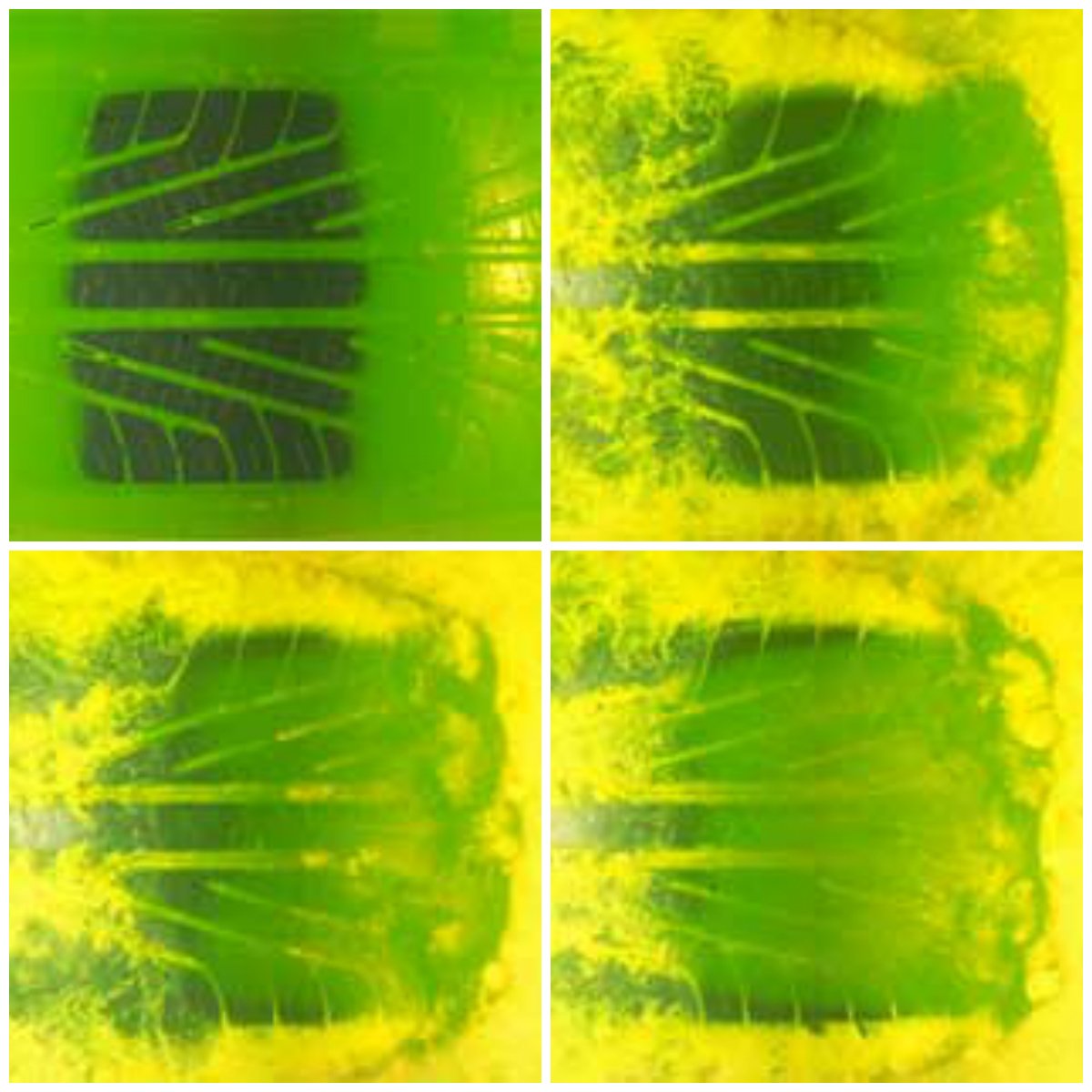 Top left photo:
 Properly inflated hydroplane resistant tire sitting still, inflated to 35 psi.
Top right photo: The properly inflated tire (inflated to 35 psi) driving across at 60 mph. Tread foot print still showing good contact.
Bottom left photo: Same tire, under-inflated to only 30 psi driving across the same depth of colored water. Notice the poor tread footprint, showing smaller contact with the center of the tire's tread being lifted as the design unsuccessfully attempts to evacuate the water.
Bottom right photo: Same tire, significantly under-inflated to only 25 psi driving across the same depth of colored water. Notice the tires tread footprint reduced to only the shoulders, showing little contact at all.
Check and maintain your vehicles tire pressure at least once a month and before any road trips. Your owner's manual or your vehicle tire placard will indicate your vehicles proper tire pressure. Need help with choosing the right tire for you?
Our team of wheel experts have years of knowledge and experience to help find you the correct tire! Just give us a call 1-800-242-9883